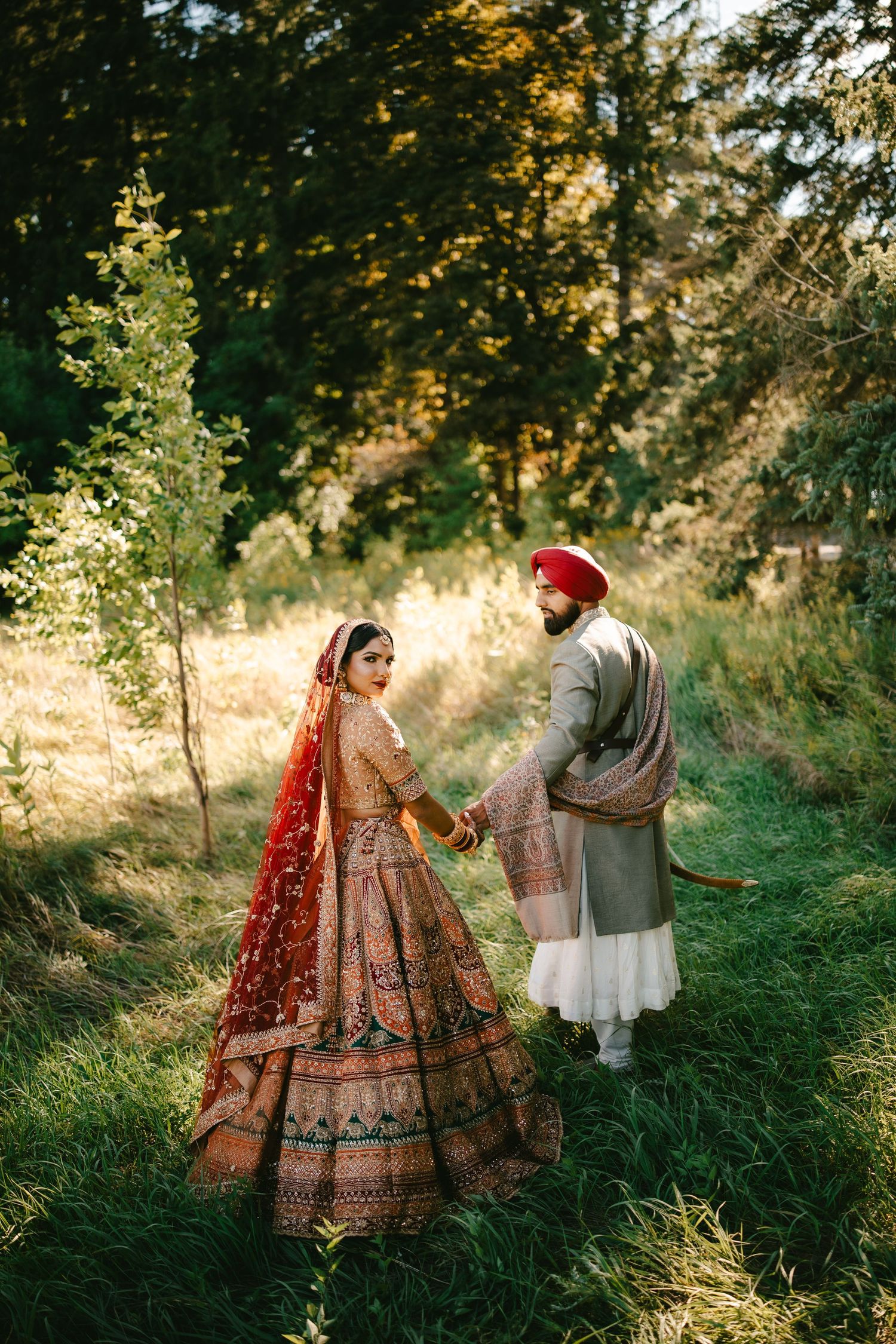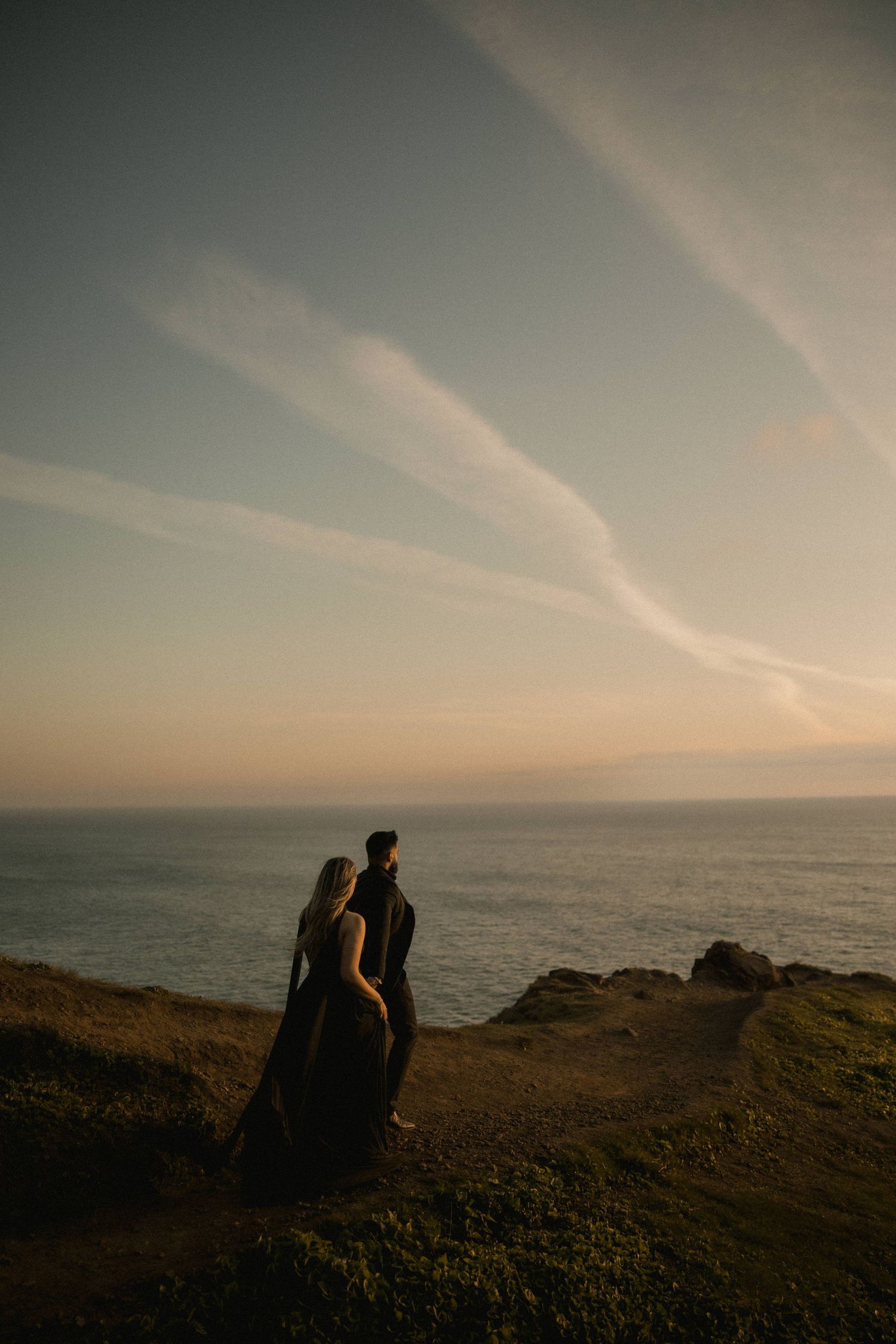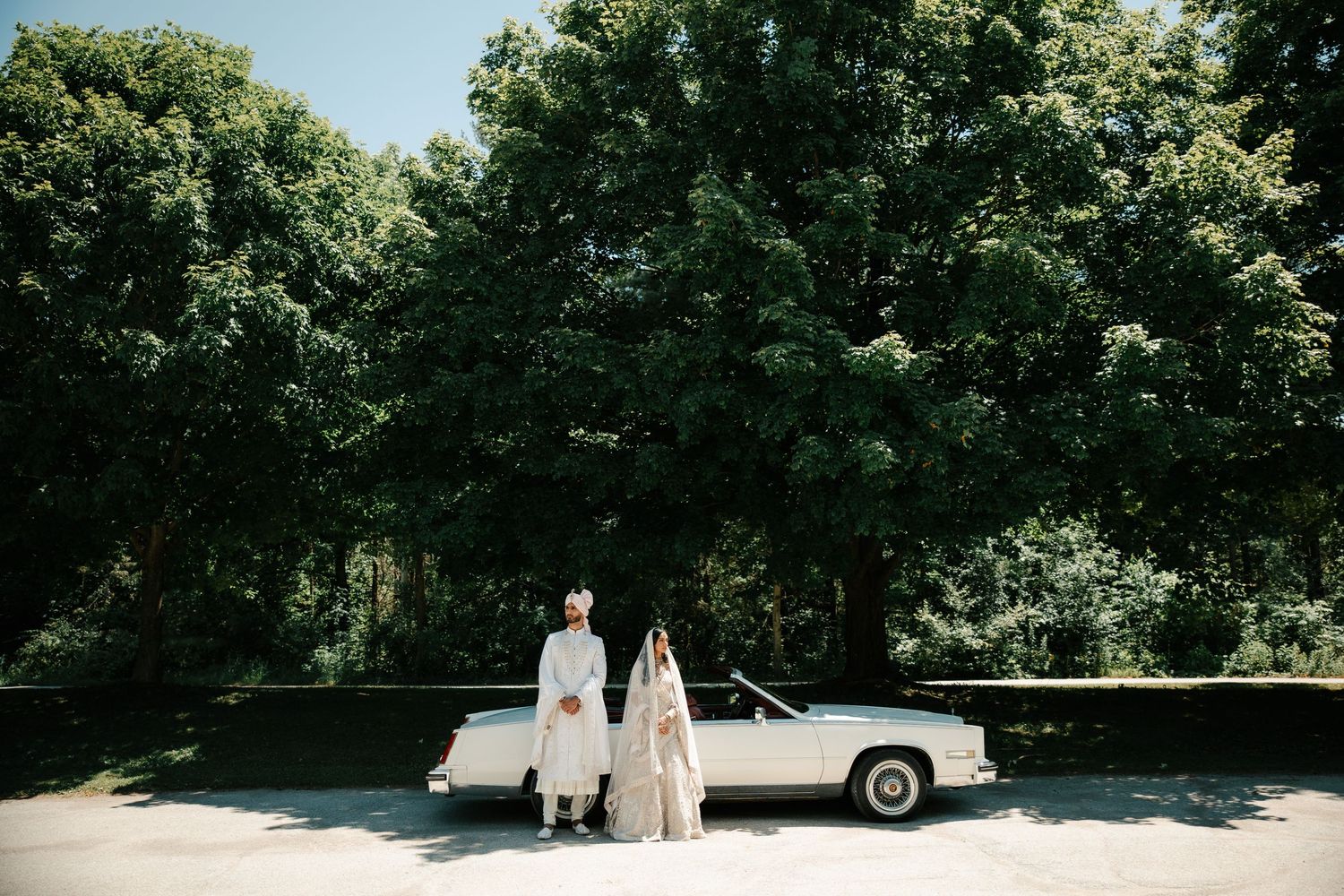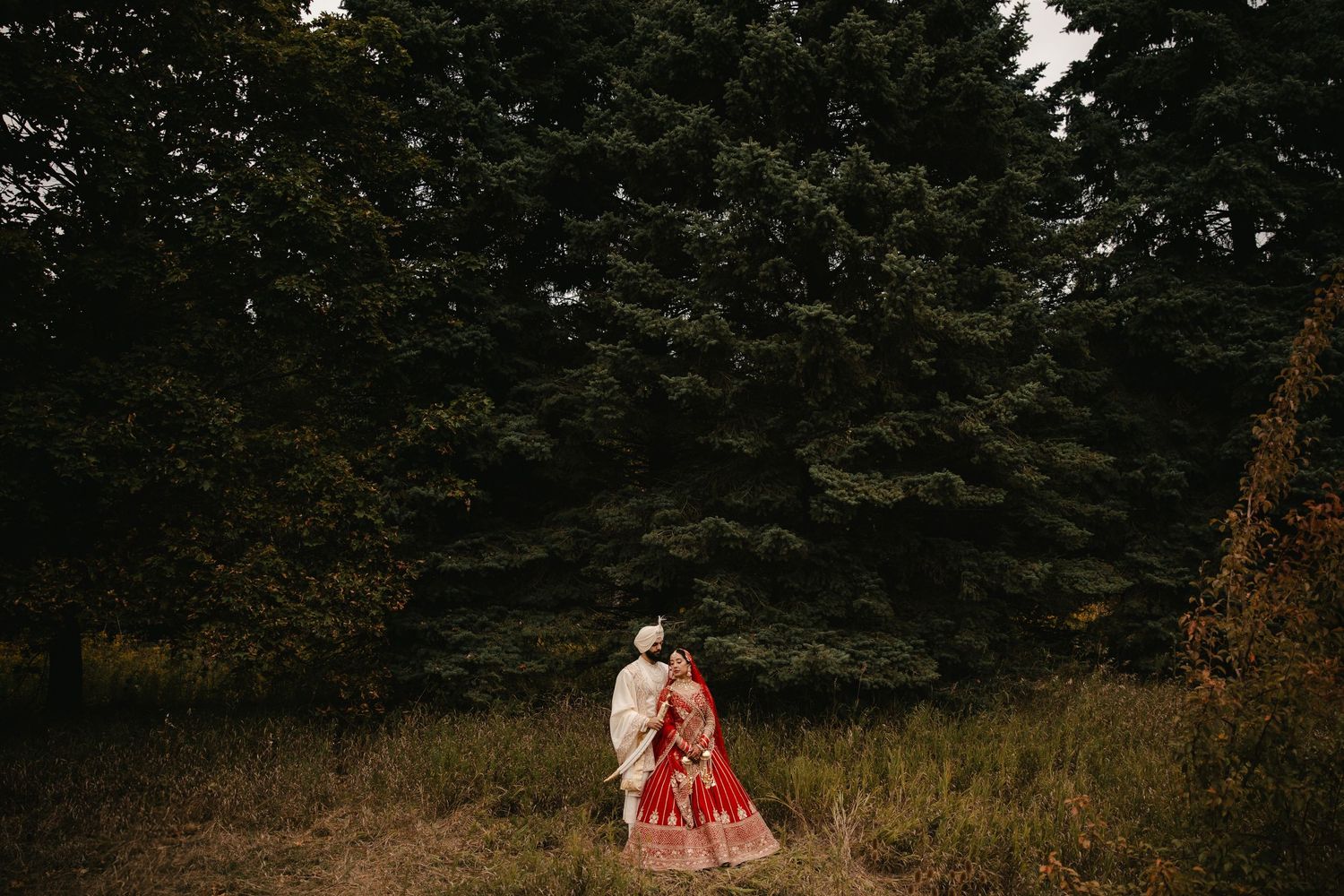
The Anand Karaj is the Sikh wedding ceremony — the sacred ritual through which two people are united in marriage under the Guru Granth Sahib, the eternal living Guru of the Sikh faith. It is one of the most beautiful and meaningful wedding ceremonies I have the privilege of photographing, and one of the most misunderstood by those who haven't experienced it.
This guide explains every part of the Anand Karaj — what happens, what it means, and how it is photographed. If you are a Sikh couple planning your wedding, a family member trying to understand what you'll witness, or someone simply wanting to learn — this is the most complete guide to the Anand Karaj you'll find.
Irvin Sidhu is a Brampton-based Sikh wedding photographer who has photographed hundreds of Anand Karaj ceremonies at gurdwaras across Brampton, Mississauga, and the Greater Toronto Area — including Gurdwara Sahib Malton, Gurdwara Sahib Dixie, Gurdwara Sahib Dunwin, Gurdwara Sahib Guelph, Ontario Khalsa Darbar, Shiromani Sikh Sangat Dunwin Gurudwara, and Sri Guru Singh Sabha Malton. Everything in this guide comes from that direct experience.
What Does "Anand Karaj" Mean?
Anand Karaj translates from Punjabi as "Blissful Union" — anand meaning bliss or happiness, and karaj meaning task, event, or union. The name captures exactly what the ceremony is: a joyful coming together, conducted in the presence of the Guru Granth Sahib and witnessed by the Sikh congregation, the sangat.
The Anand Karaj was formalised as the official Sikh marriage ceremony in 1909 under the Anand Marriage Act, and it distinguishes Sikh weddings from Hindu and civil ceremonies. Unlike many Western wedding ceremonies, the Anand Karaj is not centred on the couple exchanging vows to each other — it is centred on the couple walking together around the Guru Granth Sahib, committing to a life guided by the teachings of the Guru.
Where Does the Anand Karaj Take Place?
The Anand Karaj takes place inside a gurdwara — the Sikh place of worship — specifically in the Darbar Sahib, the main hall where the Guru Granth Sahib is installed. The ceremony cannot be conducted anywhere else in a traditional Anand Karaj. The presence of the Guru Granth Sahib is not symbolic — it is the living, present Guru, and the couple is literally circling the Guru as they take their vows.
Before entering the Darbar Sahib, everyone — including photographers — must cover their head and remove their shoes. This is non-negotiable and I always arrive prepared. I keep a dedicated patka for every ceremony I photograph.
In the GTA, the most common gurdwaras for Anand Karaj ceremonies include locations in Brampton, Mississauga, Vaughan, and Markham. I photograph at all of them and know the specific layout, lighting conditions, and ceremony flow at each one.
The Full Anand Karaj Ceremony — Step by Step
Before the Ceremony — The Milni
Before the Anand Karaj begins inside the gurdwara, the two families come together outside in a ceremony called the Milni — meaning "meeting." The groom's family arrives at the gurdwara and is formally greeted by the bride's family. Male relatives of corresponding relation are introduced to each other — the fathers, the uncles, the brothers — with garlands exchanged and embraces shared.
The Milni is one of the most photographically rich moments of the entire wedding. It is loud, joyful, emotionally charged, and happens fast. I always position for the Milni before it begins — there is no repositioning once it starts.
What I'm capturing: The groom's procession arriving at the gurdwara, the first meeting of the two families, the garland exchanges between corresponding relatives, the father-to-father moment (always the most emotional), the wider family gathering, and the transition into the gurdwara entrance.
Arriving in the Darbar Sahib — Seating and Ardas
Once the Milni concludes, the families enter the Darbar Sahib and take their seats — the congregation seated on the floor, men traditionally on one side and women on the other, all facing the Guru Granth Sahib at the front of the hall. The groom takes his place in front of the Guru Granth Sahib. The bride is then brought in by her family and seated beside the groom.
The Granthi — the person who reads and manages the ceremony — opens the proceedings with an Ardas, a formal Sikh prayer offered to the Waheguru. The congregation stands for the Ardas, heads bowed.
What I'm capturing: The bride's entrance into the Darbar Sahib, the bride and groom seated together in front of the Guru Granth Sahib for the first time, the congregation standing for the Ardas, the quiet reverence of the hall.
The Palla Rasam — The Joining
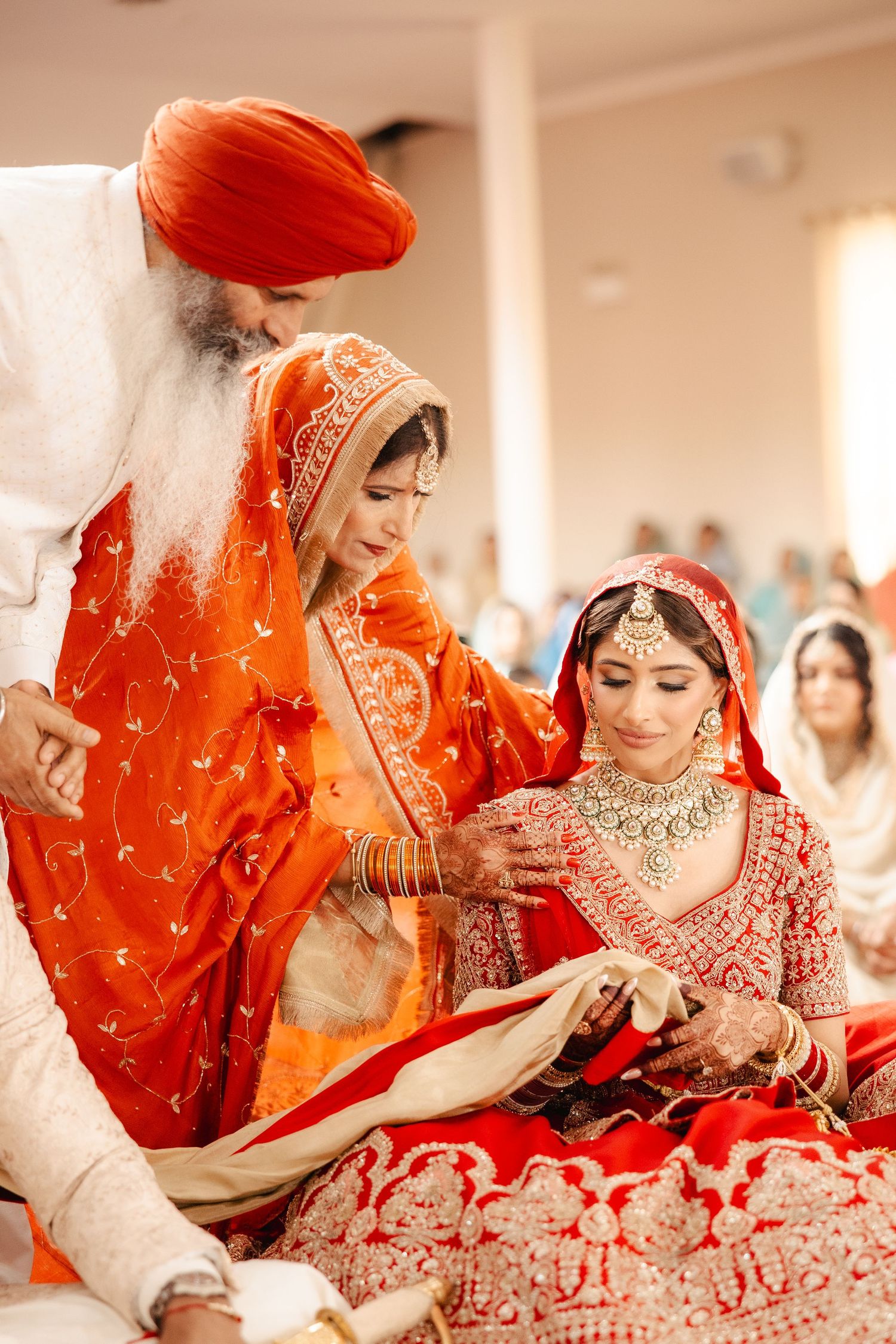
After the opening Ardas, the Palla Rasam takes place — one of the most visually significant moments of the ceremony. The bride's father (or a male relative) places one end of the groom's palla (a long scarf or cloth) into the groom's hand, and the other end into the bride's hand. This act symbolises the bride's family formally giving their daughter into the care of the groom's family.
The moment the bride takes the palla is quiet, deliberate, and deeply moving. I photograph it from a position that captures both the act and the faces of the bride's parents — because what happens on their faces in that moment is something their daughter will want to see for the rest of her life.
What I'm capturing: The father placing the palla, the bride accepting it, the couple now joined by the cloth, the parents' expressions, the wider family watching.
The Lavaan — The Four Rounds
The Lavaan are the central sacred act of the Anand Karaj — and they are what makes this ceremony unique in the world.
The Lavan are four hymns composed by Guru Ram Das Ji, the fourth Sikh Guru, describing the four stages of the soul's journey toward God. Each hymn is first read aloud from the Guru Granth Sahib by the Granthi, and then sung by the ragis(musicians). While the hymn is being sung, the couple rises and walks around the Guru Granth Sahib together — the groom leading, the bride following, holding the palla — making one complete clockwise circle before returning to their seated position. This happens four times, once for each Lav.
What each Lav represents:
First Lav — Entering the path of Dharma. The couple commits to a life of righteousness and duty. The soul begins its journey toward the divine.
Second Lav — Meeting the true Guru. The ego is released. The couple commits to humility, to letting go of the self, and to recognising the Guru's guidance in their life together.
Third Lav — The state of longing and detachment. The soul is filled with divine love. The couple commits to a love that transcends the material world.
Fourth Lav — The union is complete. The soul merges with the divine. The couple is fully, irrevocably united — in this life and spiritually beyond it.
After the fourth Lav is completed and the couple is seated, they are married.
How I photograph the Lavaan:
The Lavaan are the most photographically demanding part of the entire wedding. Each round lasts two to four minutes, and the couple moves through the hall at a deliberate walking pace. I work the full circle — I position ahead of the couple's path before each Lav begins, capture the moment they rise, follow the movement, and anticipate where the light and angle will be strongest.
I never use flash inside the Darbar Sahib during the Lavaan. I work entirely with available light — the natural light from windows, the gurdwara hall lighting — using fast lenses that can perform in low and mixed light without disruption. The quiet of the ceremony is sacred, and a photographer's flash going off during the Lavaan is never acceptable.
I also photograph the congregation during the Lavaan. The sangat watching the couple circle the Guru Granth Sahib — eyes forward, some in prayer, some quietly emotional — is one of the richest documentary subjects in wedding photography.
What I'm capturing: The couple rising for each Lav, the movement around the Guru Granth Sahib, the palla between them, close expressions during the rounds, the congregation watching, the seated return after each round, the final completion of the fourth Lav.
The Anand Sahib — Six Stanzas of Bliss
After the four Lavaan are completed, the Granthi recites the first five and the final stanza of the Anand Sahib — a composition of forty stanzas by Guru Amar Das Ji, the third Sikh Guru. Anand means bliss, and the Anand Sahib is a hymn of pure joy — the joy of the soul that has found the divine. It is recited at the completion of all major Sikh ceremonies.
During the Anand Sahib, the couple sits together in front of the Guru Granth Sahib, married. I use this time to capture the quieter moments — the couple side by side, the family settled, the full hall in a state of collective calm before the final prayer.
The Closing Ardas and Hukamnama
The ceremony closes with a final Ardas — the congregation standing together in prayer. This is followed by the Hukamnama, a random reading from the Guru Granth Sahib that serves as the Guru's blessing and guidance for the newly married couple. The Hukamnama is a deeply significant moment — the first words the couple receives as a married pair.
Finally, Karah Parshad — a sweet ceremonial pudding — is distributed to the entire congregation as prasad, the blessed offering.
What I'm capturing: The standing Ardas with the full congregation, the Hukamnama reading, the Karah Parshad distribution, and the first moments of the couple as a married pair — often quiet, often overwhelmed, always beautiful.
After the Anand Karaj — Family Portraits and the Transition
Once the ceremony concludes, the families typically gather outside the gurdwara for formal portraits before dispersing to prepare for the reception. This is one of the most logistically complex parts of any Sikh wedding — large families, multiple group combinations, often in direct sunlight or unpredictable weather.
I manage the portrait session with a prepared shot list agreed in advance, moving efficiently through family groupings without feeling rushed. The outdoor grounds of most GTA gurdwaras offer good portrait backdrops — I know which spots work best at each location.
What to Tell Your Photographer About the Anand Karaj
If you are booking a photographer who has not photographed an Anand Karaj before, here is what they need to know:
Head must be covered at all times inside the gurdwara — your photographer needs to come prepared with a head covering.
Shoes are removed before entering the Darbar Sahib.
The Lavaan move quickly — your photographer cannot be figuring out their position when the couple rises for the first Lav.
The Milni happens outside and is separate from the ceremony — your photographer needs to be outside before the groom arrives.
Different gurdwaras have different rules — some permit photographers in certain areas only. Your photographer should contact the gurdwara in advance or ensure they already know the location.
If your photographer needs any of this explained on the day of your wedding, find a different photographer.
Frequently Asked Questions — The Anand Karaj
What is the Anand Karaj? The Anand Karaj is the Sikh wedding ceremony, meaning "Blissful Union." It involves the couple walking around the Guru Granth Sahib four times while four sacred hymns — the Lavaan — are read and sung. After the fourth round is completed, the couple is married in the eyes of the Sikh faith.
How long does an Anand Karaj ceremony take? A full Anand Karaj ceremony typically takes between 45 minutes and two hours, depending on the gurdwara, the Granthi, and the pace of the Lavaan. Most ceremonies in the GTA run approximately 60–90 minutes.
Can non-Sikhs attend an Anand Karaj? Yes. The gurdwara is open to everyone regardless of faith, background, or religion. Anyone attending must cover their head, remove their shoes, and conduct themselves with respect for the sacred space and ceremony.
What is the difference between the Anand Karaj and a civil wedding? The Anand Karaj is a religious ceremony conducted under the Guru Granth Sahib. Many Sikh couples in Canada also complete a civil marriage registration either before or after the Anand Karaj. The civil registration is a legal formality — the Anand Karaj is the wedding.
What is the Milni at a Sikh wedding? The Milni is the formal meeting of the two families outside the gurdwara before the ceremony. Male relatives of corresponding relation — fathers, uncles, brothers — are introduced and exchange garlands. It is a joyful, emotional moment and one of the most important photography opportunities of the entire wedding day.
What are the four Lavaan? The Lavaan are four sacred hymns composed by Guru Ram Das Ji. Each Lav is first read from the Guru Granth Sahib and then sung by the ragis while the couple circles the Guru Granth Sahib. The four Lavaan represent four stages of the soul's journey — Dharma, the Guru's guidance, divine love, and complete union.
Planning Your Anand Karaj Photography
If you are planning a Sikh wedding in Brampton, Mississauga, or anywhere across the GTA and want a photographer who knows the Anand Karaj from the inside — I'd love to hear about your wedding.
I photograph Anand Karaj ceremonies at gurdwaras across the GTA, including Gurdwara Sahib Malton, Gurdwara Sahib Dixie, Gurdwara Sahib Dunwin, Gurdwara Sahib Guelph, Ontario Khalsa Darbar, Shiromani Sikh Sangat Dunwin Gurudwara, and Sri Guru Singh Sabha Malton.
Tell me your date, your gurdwara, and a little about your wedding. I'll respond within 24 hours.
About Irvin Sidhu
Irvin Sidhu is a Brampton-based wedding photographer specialising in Sikh and Hindu weddings across the Greater Toronto Area, British Columbia, and internationally. He has photographed hundreds of Anand Karaj ceremonies at gurdwaras across Canada and destination weddings on four continents. His work blends documentary storytelling with timeless portraiture, delivering galleries that families return to for generations. Irvin is available for weddings in Brampton, Mississauga, Toronto, Surrey, Vancouver, Abbotsford, and worldwide.