Discover the beauty of Sikh wedding traditions and learn how to capture every sacred moment on camera. From the Anand Karaj to the Milni ceremony, here's your complete guide to Sikh wedding photography in Toronto and beyond.
---
Sikh Wedding Traditions and How to Capture Every Sacred Moment on Camera
There's something truly breathtaking about a Sikh wedding. The vibrant colors, the devotional music filling the Gurdwara, the warmth of a community coming together — it's one of the most visually rich and emotionally layered events a photographer can ever have the privilege of documenting. But if you're new to Sikh wedding photography, or even if you've shot a few and want to deepen your understanding, knowing the *why* behind each moment makes all the difference.
This guide walks you through the key Sikh wedding traditions, what they mean to the families celebrating them, and exactly how to position yourself to capture them beautifully. Whether you're a photographer preparing for your first Anand Karaj or a couple in Toronto planning your big day and wondering what to look for in a photographer, this is for you.
---
Understanding the Spirit of a Sikh Wedding Before You Pick Up Your Camera
Before we talk lenses and lighting, let's talk about heart. A Sikh wedding, called the Anand Karaj (meaning "blissful union"), is a deeply spiritual ceremony rooted in the teachings of the Guru Granth Sahib, the holy scripture of Sikhism. It isn't just a social celebration — it's a sacred joining of two souls in the presence of the divine.
That means as a photographer, your approach needs to be grounded in respect. You are a guest in a holy space. The Gurdwara is not a venue; it is a place of worship, and the ceremony happening within it is not a performance — it's a prayer. Photographers who come in with that understanding consistently produce work that's not only technically strong but emotionally resonant in a way that families treasure for generations.
If you're shooting Sikh wedding photography in Toronto, you'll also find that many couples are balancing rich cultural heritage with modern sensibilities. Listening to your clients and asking thoughtful questions ahead of time will help you understand which moments carry the deepest meaning for their particular family.
---
Pre-Wedding Ceremonies: Where the Storytelling Begins
The Chunni Ceremony (Rokha)
The Chunni ceremony is typically one of the first formal events, where the groom's family officially visits the bride's home and places a red or pink chunni (dupatta/scarf) over her head, symbolizing their acceptance of her into the family. Sweets are exchanged, gifts are given, and there's an infectious joy in the air.
For photography, this is a golden opportunity for intimate, candid moments. The bride's expression as the chunni is placed on her head, the proud faces of both sets of parents, the younger cousins sneaking sweets — these are the real, unposed images that make a wedding album feel alive. Use a longer focal length (85mm or 135mm) to stay out of the way while still capturing close emotional detail.
The Mehndi Ceremony
The Mehndi night is where things get wonderfully lively. The bride's hands and feet are adorned with intricate henna designs, often containing a hidden inscription of the groom's name, which he's traditionally supposed to find on the wedding night. Family and friends gather, music plays, and the mood is celebratory and warm.
From a photographic standpoint, the Mehndi night is a macro photographer's dream. Get tight detail shots of the henna artist's work in progress — the fine lines, the patterns emerging, the bride's focused gaze. But don't neglect the wider scene. Pull back to capture the laughter, the dancing, and the generations of women sitting together. The contrast between those intimate details and the full energy of the room tells a richer story.
Lighting is often a challenge here since Mehndi ceremonies are frequently held in the evening at home or in a banquet hall. Bring a small off-camera flash or use a fast prime lens (f/1.4 or f/1.8) to work with available light while keeping the warm, candlelit atmosphere intact.
The Ghara Ghori (Groom's Pre-Wedding Procession)
Before the wedding day itself, the groom takes part in his own pre-ceremony rituals, often including a smaller procession where he's dressed and prepared by family. This is a great time to document the quieter, more masculine side of a Sikh wedding — the brothers helping tie the groom's turban (dastar), the father's quiet pride, the nervous energy mixed with excitement.
The turban-tying moment in particular is incredibly photogenic. The layers of fabric, the precise folds, the concentration on everyone's faces — it deserves its own dedicated sequence of shots.
---
The Wedding Day: Ceremony by Ceremony
The Milni Ceremony
The wedding day typically begins with the Milni (meaning "meeting"), which takes place outside the Gurdwara before anyone enters. This is where the two families formally meet and greet each other. Male relatives from both sides are paired together — fathers, uncles, brothers — and they exchange garlands and embrace while the Granthi (the officiant) recites prayers.
It's a joyful, slightly chaotic moment, and it moves quickly. Position yourself where you have a clear sightline to the exchanges without blocking the participants. A second shooter is invaluable here — one person can stay wide to capture the full family gathering while the other gets in close for the reactions and embraces. In Sikh wedding photography, the Milni is one of those moments where you simply cannot miss the expression on the parents' faces when they meet. That image, more than almost any other, tends to make mothers cry when they see the album.
The Baraat (Wedding Procession)
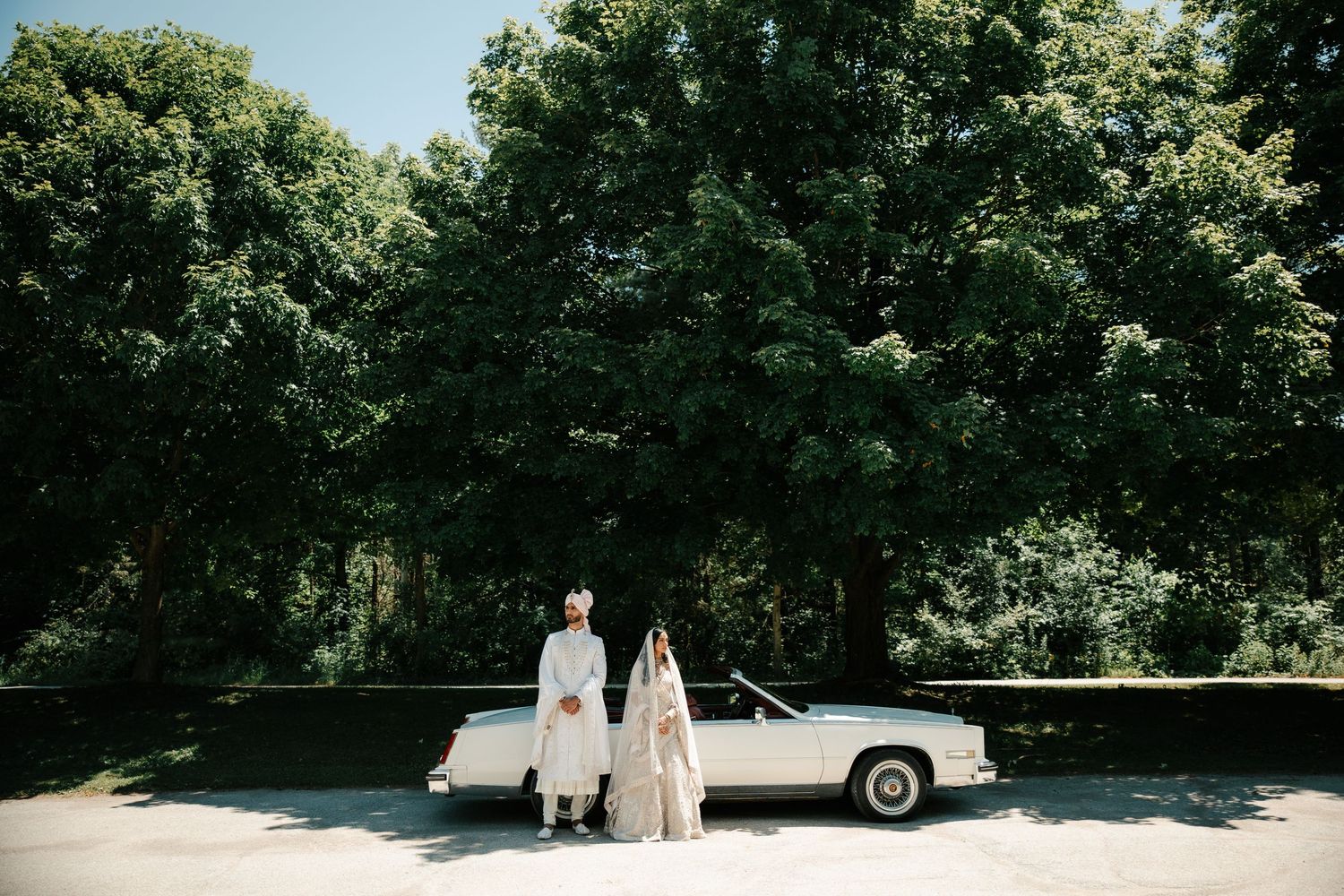
The Baraat is the groom's procession to the Gurdwara, and it's one of the most visually spectacular sequences of the entire day. The groom typically arrives on a decorated horse (or sometimes in a classic car in more urban settings like Toronto), surrounded by dancing family members, dhol drummers, and a general atmosphere of uncontainable celebration.
For the Baraat, think movement. Use a slightly faster shutter speed to freeze the dhol players mid-beat, or experiment with a slower shutter (around 1/60s) to introduce motion blur that conveys the energy of the dancing. Get low — shooting up at the groom on horseback with the sky behind him creates a powerful, almost regal image. And don't neglect the spectators. The grandmothers watching from the side with tears in their eyes, the children trying to push to the front — these peripheral moments add enormous depth to the story you're telling.
Entering the Gurdwara
Before entering the Gurdwara, everyone covers their heads and removes their shoes. This transition moment is quietly beautiful and often overlooked. The act of covering one's head is an act of humility and reverence — photographing it thoughtfully, without being intrusive, speaks volumes about what this ceremony means.
Once inside, be aware of Gurdwara etiquette. Always sit lower than the Guru Granth Sahib, move respectfully and slowly, and check ahead of time with the Granthi or the family about any photography restrictions specific to that Gurdwara. Some permit photography freely; others have designated areas or ask that flash not be used during certain prayers.
The Anand Karaj — The Heart of It All
The Anand Karaj is the central ceremony, and it revolves around the Laavan — four sacred hymns from the Guru Granth Sahib that the couple circumambulates (walks around the holy scripture) together, four times. Each round is called a Lav, and each represents a stage of the soul's journey toward divine union. As the Ragis (musicians) sing each hymn, the couple walks slowly around the Guru Granth Sahib, typically led by the bride's father or brother holding the palla (the groom's sash), with the bride following.
This is the most sacred sequence of the entire wedding, and it deserves your full attention and your best work.
A few practical tips for photographing the Laavan:
The light inside Gurdwaras is often a mix of warm overhead lights and natural light from windows or skylights. Scout the space before the ceremony begins and identify your best positions. Avoid using flash during the Laavan out of respect — bump your ISO and shoot wide open instead. Most modern mirrorless cameras handle ISO 3200–6400 beautifully, giving you clean, warm images that feel genuine to the environment.
Position yourself so you can capture the couple's faces during each circuit, not just their backs. The expressions during the Laavan — particularly the moments between the couple when they glance at each other — are extraordinary. These are the images that will define the album.
Don't forget the Guru Granth Sahib in the frame occasionally. Including the holy scripture contextualizes what the couple is doing in a way that words can't. It's not just two people walking in a circle — they are walking toward a life guided by faith.
After the four Laavan, the Anand Sahib is recited and the ceremony concludes with Ardas (a communal prayer) and the distribution of Karah Parshad (a sweet sacred food). Photograph the sharing of Parshad — it's a moment of community and blessing that makes for a beautiful closing image of the ceremony sequence.
---
Post-Ceremony Celebrations
The Reception and Langar
After the Anand Karaj, celebrations typically move to a reception hall for dinner, dancing, and speeches. Many Sikh weddings also include Langar — the Gurdwara's tradition of a communal meal served to all, regardless of background. If Langar is part of the day, document it. The sight of family members serving food together, of guests sitting side by side, carries a message of equality and community that is central to Sikh values and makes for deeply meaningful photographs.
The reception itself tends to be energetic and full of color. This is the time to focus on the details — the bridal jewelry, the embroidery on the lehenga, the table arrangements — as well as the big moments like the couple's first dance, the speeches, and the family portraits.
Bridal Portraits and Couple Portraits
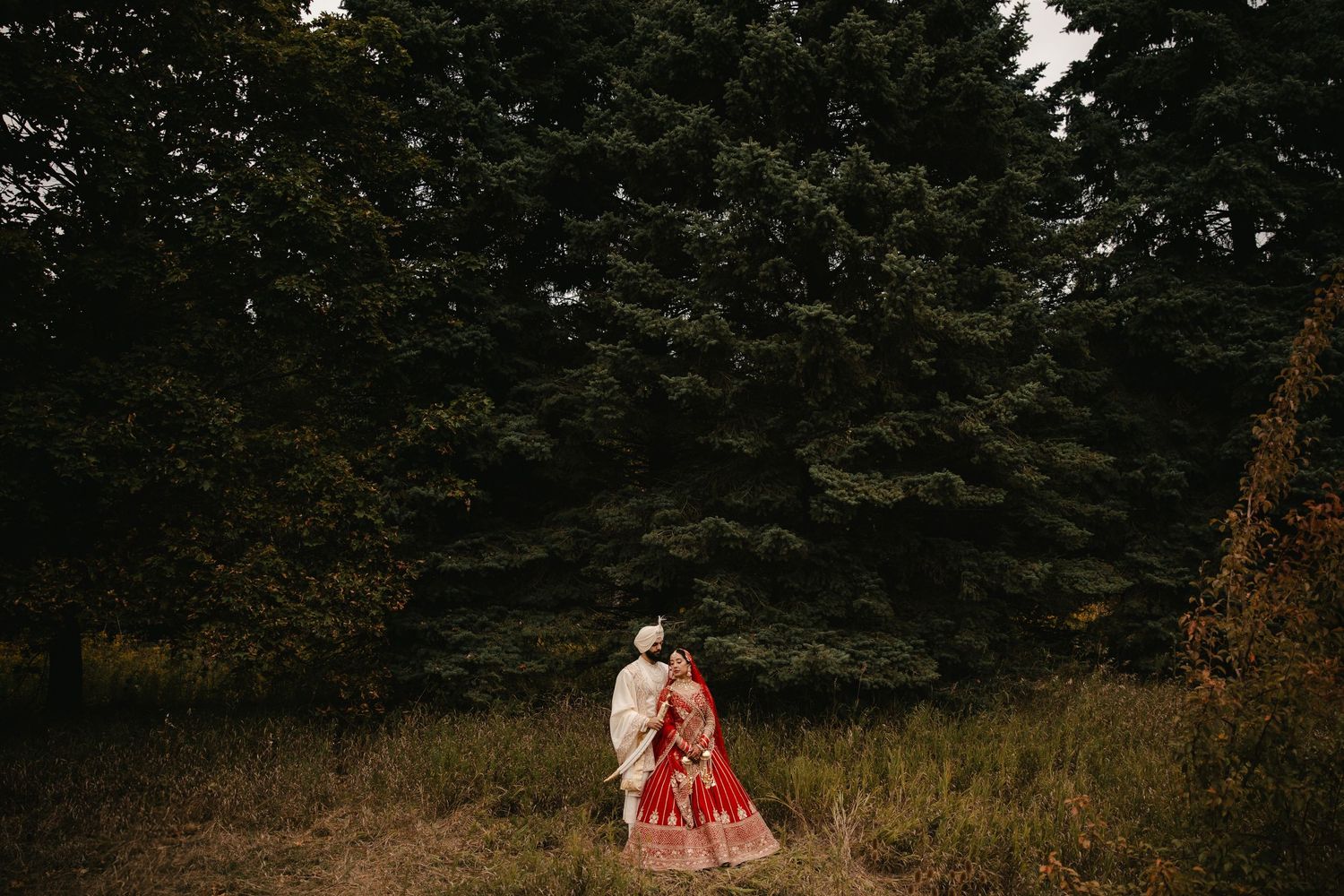
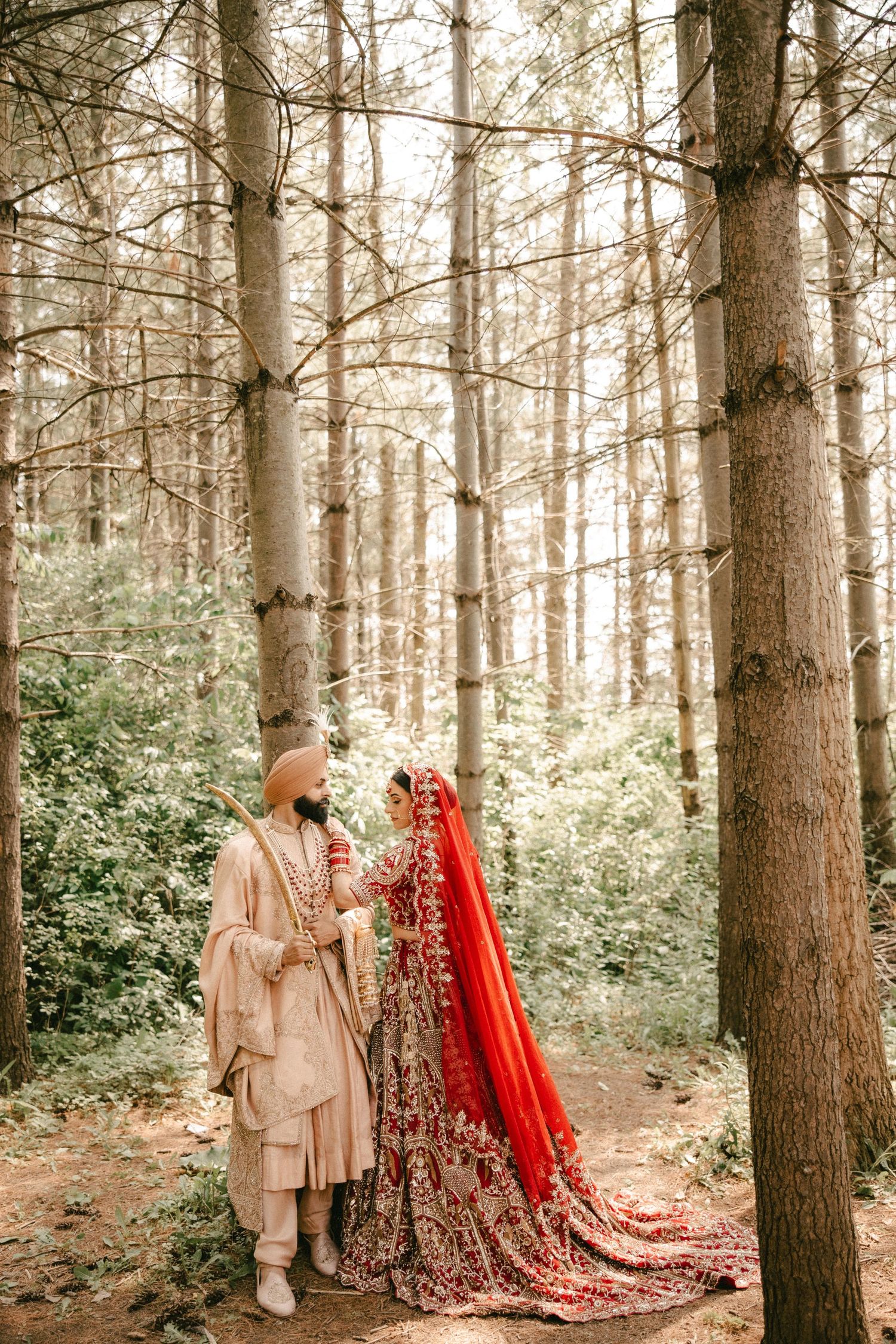
If you have a window of time between the ceremony and the reception, use it wisely for portraits. Sikh bridal attire is extraordinarily photogenic — the rich reds and pinks, the gold jewelry, the maang tikka (forehead ornament), the elaborate bangles. Natural light, when available, does incredible things with the embroidery and beadwork.
For couple portraits, encourage genuine interaction rather than stiff posing. Ask them to whisper something to each other, or simply walk together. After the intensity of the ceremony, couples often feel a wave of relief and joy — catch that. The quiet, in-between moments right after the Anand Karaj, when they're still processing the enormity of what just happened, can yield some of the most moving portraits of the day.
---
Practical Tips for Sikh Wedding Photography in Toronto
Toronto has one of the largest Sikh communities outside of India, which means the city is home to a wide variety of Gurdwaras, each with its own character and logistical considerations. A few things to keep in mind when shooting Anand Karaj photography in Toronto specifically:
Scout your Gurdwara in advance. Visit the space on a regular service day to understand the light, the layout, and the acoustics. Introduce yourself to the Granthi and ask about any guidelines for photographers. Most Granthis appreciate the courtesy, and it often results in better access and cooperation on the wedding day.
Build your shot list collaboratively. Sit down with your clients and go through the day together. Ask which relatives are most important to include in family formals, whether there are any special rituals unique to their family's tradition, and what moments they're most nervous about missing. This conversation builds trust and ensures nothing is overlooked.
Have a second shooter. Sikh weddings are complex, multi-location events that often run across an entire day. Having a second photographer means you can cover the groom's preparation while simultaneously capturing the bride getting ready — two equally important stories happening at the same time.
Embrace the color. Sikh weddings are a feast for the eyes. Don't be afraid of bold, saturated images. Your editing style should enhance the warmth and richness of the environment rather than mute it. Many families actually prefer vibrant, true-to-life colors over heavily desaturated presets.
Stay flexible. Like all weddings, Sikh ceremonies rarely run precisely on schedule. Be mentally prepared to adapt, move quickly, and find good light wherever you are.
---
What Couples Should Look for in a Sikh Wedding Photographer
If you're a couple planning your Anand Karaj in Toronto and you're researching photographers, here are a few things worth prioritizing beyond just a pretty portfolio.
Look for a photographer who demonstrates cultural awareness — someone who knows what the Laavan are, understands the significance of the Guru Granth Sahib, and has either photographed Sikh weddings before or has done genuine research to prepare. Cultural sensitivity isn't a bonus; it's essential.
Ask about their experience in low-light Gurdwara environments. Not every photographer handles the transition from bright outdoor Baraat shots to dim indoor ceremony lighting gracefully. Ask to see full gallery samples from previous Sikh weddings, not just highlight shots.
Look for genuine storytelling ability. The best Sikh wedding photographers don't just capture what happened — they capture why it mattered. Their photos should make you feel the emotion of the moment, not just document that it occurred.
And finally, trust your instincts about the relationship. You'll be spending one of the most significant days of your life with this person. They should feel like someone you're comfortable with, someone who listens, and someone who genuinely cares about your story.
---
Final Thoughts
Sikh weddings are among the most layered, meaningful, and visually stunning events in the world of wedding photography. Every element — from the colors of the bridal attire to the sacred words of the Laavan — carries centuries of meaning and devotion. When you approach this work with the respect and preparation it deserves, the images you create become more than photographs. They become heirlooms.
Whether you're a photographer looking to grow your expertise in Sikh wedding photography or a couple in Toronto searching for someone who will honor every sacred moment of your Anand Karaj, the foundation is the same: curiosity, respect, and a genuine love for the stories that families carry forward through generations.
That's what makes this work so extraordinary. And that's worth showing up for, every single time.